


The war in Iran began in spectacular fashion. Just a few weeks ago, a joint American-Israeli attack on Iran’s military capabilities and leadership was launched in the late hours of the morning, neutralizing dozens of dangerous enemies of the Jewish people and of civilization at large.
It would be an understatement to say that the repercussions, both in the short-term and in the long-term, are significant. And it is unsurprising that pundits of all persuasions have rushed to deliver an unending stream of commentary, ranging from middle-of-the road geo-political-blather to fringe-conspiracy-theories of the horseshoe variety. In this saturated media climate we instinctively view things through our chosen political lens, allowing “conventional wisdom” and the tired talking points of influencers, podcasters, statusers etc. etc. to cloud our vision of reality.
But how should we think about what has happened in the last few weeks? And where should we hope that these events will lead to?
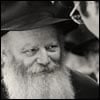
For the long view, I look not to the various analysts of today but to the visionary insight, guidance, and leadership provided by the Rebbe, Rabbi Menachem M. Schneerson, of righteous memory. Over a period of more than 40 years, the Rebbe was highly attentive to geo-political events playing out in real time, and was amazingly consistent in his insistence that we should not allow ourselves to be duped into accepting the nihilistic presumption that “the world runs as the the world runs” (olam keminhago noheg). Rather, we must always remember that “there is a master to this place” (yesh baal habayit lebirah zu) and “give full attention to the miracles and wonders” that G‑d is orchestrating.
In the first of a series of three public letters issued at the conclusion of the 1991 Gulf War, the Rebbe wrote “These were revealed miracles, obvious miracles, not only for Jews but also for all nations, ‘seen in all the corners of the earth.’”
Recognizing the miracles in our lives, the Rebbe explained at the time, is especially vital as the Jewish month of Nissan begins, the month during which the Jewish people celebrate Passover and the greatest miracle of all, the Exodus from Egypt, marking their birth as a nation. Nissan is rooted in the Hebrew word nes, miracle. “Moreover, as our Sages point out, the name of the month (by its two letters nun, making it readable forward and backward) indicates a ‘multiple of miracles’ and ‘miracles within miracles,’” the Rebbe wrote then. “Thus it is certain that [G‑d] will show even greater miracles than heretofore.”1
And so, in these days between Purim and Passover, it is appropriate for us to go beyond the noise and pause, if only for a moment, and acknowledge the hand of G‑d guiding events in the Middle East, around the world and in our own lives.
Sometimes this may feel difficult, but by turning to some earlier examples of how the Rebbe addressed unfolding crises in the Middle East, perhaps we can gain some clarity about the events unfolding right now.
Mistake or Miracle?
In March 1980 the United States stunned the world by voting for United Nations Security Council Resolution 465. The leader of the Free World joined China, the Soviet Union and East Germany, among other anti-colonial luminaries, in demanding that Israel dismantle all Jewish settlements in parts of the Land of Israel re-captured in the 1967 Six Day War, including the ancient Jewish capital of Jerusalem. The U.S. said at the time that it was the Israeli government’s decision to allow Jews to live in Hebron—home to the Cave of Machpelah purchased by Abraham, the first seat of King David’s throne, and centuries of flourishing Jewish life halted only by the 1929 Hebron Massacre—that had spurred it to condemn Israel so blatantly.
Naturally, the Arabs and Europeans were thrilled. So was the State Department. “We finally came out of the closet on this one,” an unnamed diplomat gushed. “Carter’s got guts—he’s putting the pressure on the Israelis.” That the UN had condemned the Jews for being so brazen as to live on their own historic homeland was of course not in itself noteworthy. That the U.S. had thrown its lot in with what Daniel Patrick Moynihan had a few years earlier called “the tyranny of the UN’s ‘new majority’” was.
“The occasion was indeed historic,” Time explained. “For the first time, the U.S. had supported a Security Council resolution criticizing Israel.
“Or had it?”2
The UN vote had originally been scheduled for Friday, February 29. U.S. Ambassador Donald McHenry got it pushed off to the next day, Saturday, March 1. By Monday, March 3, 1980, the White House was in full-blown panic mode. Here’s how the New York Times reported what happened next: “President Carter, in an extraordinary statement released by the White House late tonight, said that the United States vote against Israel in the United Nations Security Council on Saturday was in error and had resulted from a failure of communications within his Administration about his instructions. The statement was issued at 10 P.M.”3
Recriminations followed. There had been a breakdown in communication between Carter, Secretary of State Cyrus Vance and Ambassador McHenry. Vance had told the president that all his edits had been incorporated in the final text, with Carter then approving a “yes” vote without reading the document. Carter was livid. There were calls on him to fire McHenry and Vance, who issued a statement taking “full responsibility for what happened.” This was all also taking place in the midst of Carter’s bruising primary race against Sen. Ted Kennedy, who called the U.S.’s vote “shameful.” While certainly an unusual turn of events, Kennedy’s victory in the New York State Democratic primary a few weeks later would indicate this was all politics-as-usual.
But the Rebbe did not see it that way.
“In these days an open miracle has occurred … ,” the Rebbe pointed out a week after the UN vote. “It began on 13 Adar, the day [the Jews were granted the right] ‘to assemble and to protect themselves’ [in ancient Persia],4 and concluded on Shushan Purim.”5
Let’s recall the scheduling of the vote. In order to work on the language of the draft resolution, McHenry had successfully gotten the UN vote pushed off until March 1. That was Shabbat, 13 Adar on the Jewish calendar. Anti-Jewish plots accidentally incorporating notable dates on the Jewish calendar, especially in the month of Adar, is a recurring theme in Jewish history, whether Haman’s lottery in ancient Persia or, as it turned out, the UN vote in New York. Chabad.org’s Today in Jewish History explains the significance of the date: “On the 13th of Adar of the year 3405 from creation (356 BCE), battles were fought throughout the Persian Empire between the Jews and those seeking to kill them in accordance with the decree issued by King Achashveirosh 11 months earlier.” The Fast of Esther usually takes place on 13 Adar, but in 1980 it was held two days earlier because it fell out that year on Shabbat.6
It was also the Shabbat before Purim, Shabbat Zachor. That is the Shabbat preceding Purim, when Jews read in the Torah the exhortation to remember the evil Amalek did to them in the desert. Jews around the world celebrated Purim the next day, Sunday. Everyone, that is, but the Jews of Jerusalem—a walled city since the days of Joshua—where the holiday was marked one day after that, what’s known as Shushan Purim, that year a Monday. Monday was that busy day in Washington, when a confused and spinning White House issued what Time called its “astounding” statement walking back its “historic” vote.
The Rebbe explained (free translation):
On this past Shabbat, 13 Adar, the United States voted in favor of a decree that is against the Jews, a choice that everyone agrees is impossible to understand, for the U.S. surely knew that this decree would cause a storm and they would regret it. Nevertheless, the President of the United States voted in favor of it. Even according to the commentators who explain it as having been the result of a breakdown in communication, this itself is beyond (or beneath) the natural order of things … .
The Rebbe had on numerous occasions faulted Israel’s political leaders for the pressure they received from the U.S. and the international community. It was they who, rather than standing up and declaring with conviction that the Land of Israel belongs to the Jewish people, and that Jews have an inalienable right to live in its entirety, had equivocated and in doing so communicated their lack of certitude to friends and enemies alike.7
Conversation at the time surrounded the status of Hebron: Israel had recaptured the ancient Davidic capital more than a decade earlier. Why had Israeli leaders been so scared to allow Jews to return to their homes, to once again live in one of Judaism’s four holy cities? “In truth,” the Rebbe said on the Purim day between the vote and its withdrawal, “Jews ought to have the right to settle in Rabbat Ammon [Amman], Alexandria and Baghdad, like anyone else in the world. But here we are speaking about Hebron, which is under Jewish control and has belonged to Jews from time immemorial!”8
If that was what happened when Jews stood meekly on the world stage, then in the days following the UN vote and Carter’s stunning reversal the Rebbe pointed out the power of its opposite, conviction. Israel had with one voice slammed the motion as both “repugnant and unjustified” and “barbaric.”9 The central lesson of Purim, the Rebbe reiterated that Shabbat, was that the Jewish leader Mordechai “would neither kneel nor prostrate himself.”10 It was for this reason that “these days of Purim shall not be revoked from amidst the Jews, and their memory shall not cease from their descendents.”11 The Book of Esther was not ancient history but provided lessons for day-to-day life.
It was not an accident that the initial vote had occurred on 13 Adar, the Rebbe pointed out. On this date, back in ancient Persia, no one yet knew what would result from the great battle between the Jewish people and their enemies. The same was true as far as the UN vote went. But since the Jewish people had chosen to stand up for themselves, like Mordechai of old refusing to “kneel nor prostrate” themselves and instead declaring with unified conviction that the resolution was an utter sham, a miracle had occurred. “Indeed, on the 15 Adar [Shushan Purim] the leader of this country expressed regret for how he had voted, and this was publicized for all to see and in all ‘127 provinces.’”
The story of Purim, the Rebbe continued, was playing out right before our eyes. “One does not need to even open the Megillah in order to know its miracles,” he said. “He can just open the newspapers and see all of the miracles of the Megillah written in the language of the land!”
On the day after Carter’s dramatic withdrawal of his administration’s vote at the UN, the Rebbe wrote a letter to Joseph Ciechanover, director general of Israel’s ministry of foreign affairs. While the reversal was “an unprecedented event in U.S. history,” he noted, it was nevertheless “only verbal (without any practical import.) In reality, [Israel’s security] depends on the true strength of ‘the nation dwelling in Jerusalem,’12 and on a great miracle from Heaven (even greater than all the miracles noted above.)”13
In Those Days, In Our Times
With the advantage of hindsight, let’s return to 2026. Over the past few weeks the miracles of Purim have likewise been playing out in the newspapers, and perhaps in an even clearer form than they did back in 1980. This is not a matter of America, a dear friend and ally of Israel, backing down from pressuring Israel to do something against its own interests. Nor is it a matter of mere words. In this case, the U.S. recognized and acted in the defense of its own interests by standing up to the Iranian regime, which, after all, hates America even more than it does the Jewish people and the Jewish inhabitants of the Land of Israel. (See Khomeini’s description of the U.S. as the “Great Satan” and Israel as the “Little Satan.”) Israel showed it was serious about tackling the Iranian threat, and the U.S. recognized in Israel a true partner in the vital defense of civilization.14
Enter once again the Adar timeline: the joint U.S.-Israeli operation was launched on Saturday morning, Feb. 28, 2026—Shabbat Zachor. The operation then continued into Purim, the joyous holiday when the Jewish people recall their miraculous salvation in ancient Persia, known today as Iran and the very place where their once-feared enemies were again being soundly defeated.
In his speech announcing the start of what the U.S. calls Operation Epic Fury, President Trump even alluded to the theme of “Zachor,” the obligation to remember: “For 47 years, the Iranian regime has chanted Death to America and waged an unending campaign of bloodshed and mass murder, targeting the United States, our troops and the innocent people in many, many countries,” he said. “Among the regime’s very first acts was to back a violent takeover of the U.S. Embassy in Tehran, holding dozens of American hostages for 444 days. In 1983, Iran’s proxies carried out the marine barracks bombing in Beirut that killed 241 American military personnel.”15
America has an obligation to defend her people and help secure the wellbeing of the world at large. This includes bearing witness to evil and protecting humanity from it. She does this not for the Jews or for Israel, which is helping the U.S. as much as the U.S. is helping Israel, but for herself. As the Rebbe emphasized on several occasions, the Founding Fathers of the United States of America understood themselves to be guided and aided by Divine Providence. The nation’s leaders should recognize that it is Divine Providence that has made her the first-ever world power to also be a “nation of kindness,” and blessed her with riches never before seen in history. This combination empowers and requires her to care for all parts of the globe, the defense of the spiritual good being directly tied to her material welfare. None of this is an accident, but a direct outgrowth of America’s founding and guiding belief in a Master and Creator of the universe who continues to direct it.16
This amazing confluence of events, hundreds of years in the making, is indeed providential.
In so many ways the Iranian regime has been the very antithesis of “a nation of kindness.” For decades they have been an exporter, funder, and orchestrator of terror throughout the world, and the primary source of instability across the Middle East in particular. Iran has also treated their own citizens diabolically, murdering tens of thousands just in the last few months.
It is little wonder that many in Iran and in the surrounding nations have welcomed this war, despite the short term risks to their own economic welfare and indeed their own lives. The New York Times reported on Tuesday that Saudi Arabia, no less, has been pushing the U.S. to continue fighting in Iran.
The spectacular extends to the defensive side of this operation as well: An Iranian ballistic missile carrying hundreds of kilo of explosives hit a Tel Aviv apartment building directly on Monday night. Despite scenes of “widespread destruction after the missile impact left a large crater alongside mangled buildings and vehicles at the scene of the attack,” only four people were lightly injured, none of them requiring hospitalization.17
Which brings us to the next question: If the war in Iran is so clearly a battle between good and evil, an easily-identifiable milestone in the defense of civilization, why has so much of the public discourse (on both sides of the so-called political spectrum) been trying so hard to muddy the waters?
The Not-So-Random
Purim explains this, too, and offers us a path forward, for Purim is also a story about nihilism and how to fight it.
Long before the U.N. vote fell out on 13 Adar, Haman threw lots to determine the date when he would destroy the Jews. This turned out to be in the month of Adar, which caused Haman to be happy, for it was the month in which Moses died. “But,” explains the Talmud, “he did not know that not only did Moses die on 7 Adar, but he was also born on 7 Adar.”18
The Rebbe asks a very simple question:19 What was Haman’s thought process in the first place? Didn’t Haman know that it was G‑d’s will to create the world and have the Jews study Torah and perform mitzvot, for which reason He had given them the Torah at Mount Sinai? Would G‑d, Creator of the universe, really allow Haman to deprive Him of something He so clearly desired?
No, the Rebbe explains, Haman understood that in the natural order of things G‑d would not allow for such a thing, and so he resorted to casting lots. Will and desire are generally thought of as dictated by some kind of motive or reason. Chassidut explains these to be lower forms of desire. The higher form of desire is in fact one of the deepest expressions of the soul: I want something because I want it and for no other reason.
A lottery hacks that system, and declares something else: actually, I don’t care. Whether we’re talking about sequences of numbers or two identical red Ferraris, the lottery chooses on your behalf; you have determined that chance will dictate your desire and guide your future. After all, you don’t care.
G‑d Almighty created the world, chose the Jews as His people and expressed His desire that they study Torah and perform mitzvot. So Haman thought to himself: What if I can channel that place in G‑d which is above His will to create the world and desire for the Jews’ spiritual service? At that level, all activities taking place in this physical material world cease to matter, spiritual light is the same as spiritual darkness, and good is not better than evil. Haman knew that he might lose, but he would take his chances. “I don’t care,” he said. “Everything is random, just like this here lottery.”
That’s a theme nowadays, too. Jew-haters, whether they are podcasters with a platform or nutters on the subway or “teachers” in “classrooms,” want to believe that there is no difference. They’ll tell you that Churchill was worse than Hitler, that the villains of October 7 were its heroes, and that baby boys and girls in Kfar Aza or Be’eri were born colonizers and deserved to be slaughtered. They’ll say that the United States is the greatest threat to world history, that 1940s Germany merely desired stability, and that toppling the barbaric Ayatollah in Tehran is “absolutely disgusting and evil.”
The Jews will naturally dominate such people’s thoughts, for it is the Jews’ survival as a nation throughout the ages that undermines their argument that G‑d doesn’t care, that nothing actually matters, and that darkness will eventually take over because … why not?
The answer to Haman’s challenge and to that of his spiritual descendants until our very day, explains the Rebbe, is choice. The freedom to choose, much like a lottery, must by necessity be between two equal things. If one is logically better than the other, then logic would dictate which to choose. The same goes for desire—if I desire it, then I’m not actually free to choose, for my desire has spoken. The true freedom to choose is, in this way, very similar to the randomness of a lottery, but with one underlying difference: Choice remains with the human being, and the individual takes responsibility for the choice they are making. The very fact that he or she has chosen of their own free will renders that choice important, morally significant, rather than a nihilistic wager.
Another time when Jews were placed on the knife edge between a moral choice and a nihilistic wager was during the Holocaust: Under unimaginably dark circumstances, one might be tempted to decide nothing matters. Share the bread, or keep it for yourself? Extend love or friendship or a kind word to a stranger, or turn your back because the end is near? Does it matter? Choosing good in that time and place made no logical sense. Yet so many remained determined to choose good, and indeed their choices did matter. The murderers on the other side, the ones who guarded the gates and herded the Jews into the gas chambers, who said life is like a lottery and good can be evil and evil can be good—it is they who lost the war and bear the consequences to this day.
We, thankfully, do not live during that time, but the choice remains ours to make. Since October 7, 2023, Jews around the world have chosen to engage more, not less, with their Jewish identity. They have done so under relatively trying conditions, rejecting the nihilism found on many campuses, online, and in public discourse. Why? Because they, like their ancestors in ancient Persia before them, have reached into their essential self and of their own free volition chosen the Almighty.
The Rebbe explored this idea of the lottery, the nihilist and the miraculous power of choice in a discourse he delivered on Purim of 1953. Days later another of Haman’s inheritors, Joseph Stalin, would experience a sudden and grotesque death. Stalin’s Marxist-Leninist ideology dictated that “everything that allows the triumph of the revolution is moral, and everything that stands in its way is immoral,”20 meaning, actually, that morality does not exist and man can go right ahead and reshape G‑d’s world within the suffocating confines of human logic. He too lost.
The Rebbe edited this discourse nearly four decades after first teaching it, and it was published on Feb. 25, 1991, the date on the Jewish calendar being 11 Adar. Because we’ve already established that nothing is in fact random, it is at least worth noting that the current operation in Iran began, and the day the Ayatollah Khamenei was killed, on February 28, which this year coincided with 11 Adar.
‘I Will Show You Wonders’
If what we’ve been discussing until now has been about choosing to see world events and events in our own lives not as random, but as guided from Above and indeed miraculous, the month of Nissan and the holiday of Passover offer us something more: the promise of clear and open miracles akin to the Exodus from Egypt.
Passover is when G‑d Himself led the Jewish people out of slavery in Egypt, a literal revelation of G‑dliness in the world. This moment of redemption transformed the Jews into a people, embedding the miraculous in their DNA. G‑d had no reason to redeem the Jews; they were, in fact, on the 49th level of impurity, the absolute brink of spiritual oblivion. But He chose to rescue them in a wondrous way before the entire world, a story the Jewish people have retold year after year for millennia.
Passover reflects this essential bond between G‑d and the Jews, which is why they have throughout history marked the holiday in ways that defy logic. The Passover Seder is by far the most widely celebrated Jewish ritual. Matzah has been baked in Soviet Gulags and the Nazi death camps. Generations have gathered for the Seder in the Bronx and Buenos Aires. Participating in the Seder, eating the matzah, drinking the wine, telling the story of the Exodus—these are tangible, physical manifestations of the continued and miraculous existence of the Jews as an eternal people.21
“As in the days of your liberation from the land of Egypt I will show you wonders,” it says in Michah.22 The Rebbe quoted this many times over the years, and especially in 1991. The “revealed wonders” of the coming days of Moshiach, the Rebbe wrote then, would be similar to the miracles of the Exodus, but even more wondrous:
Furthermore, there is an additional emphasis that the latter miraculous wonders will unfold in the form of I will show you … that [G‑d] Himself will reveal them … both to the eye as well as to the mind, so that a human being can see and perceive the truth and innermost depth of the Divine Providence in the natural order as well as in the supranatural way, and even beyond, in the realm of the indescribably “wonderous.”23
Such is the hope and the promise of the miraculous month of Nissan and of Passover, the festival of Freedom: We ain’t seen nothing yet.





Join the Discussion